
UMI: NFC Tech Meets Empathetic Storytelling
Designing an emotionally resonant, NFC-enabled character product that bridges digital interaction and physical ownership
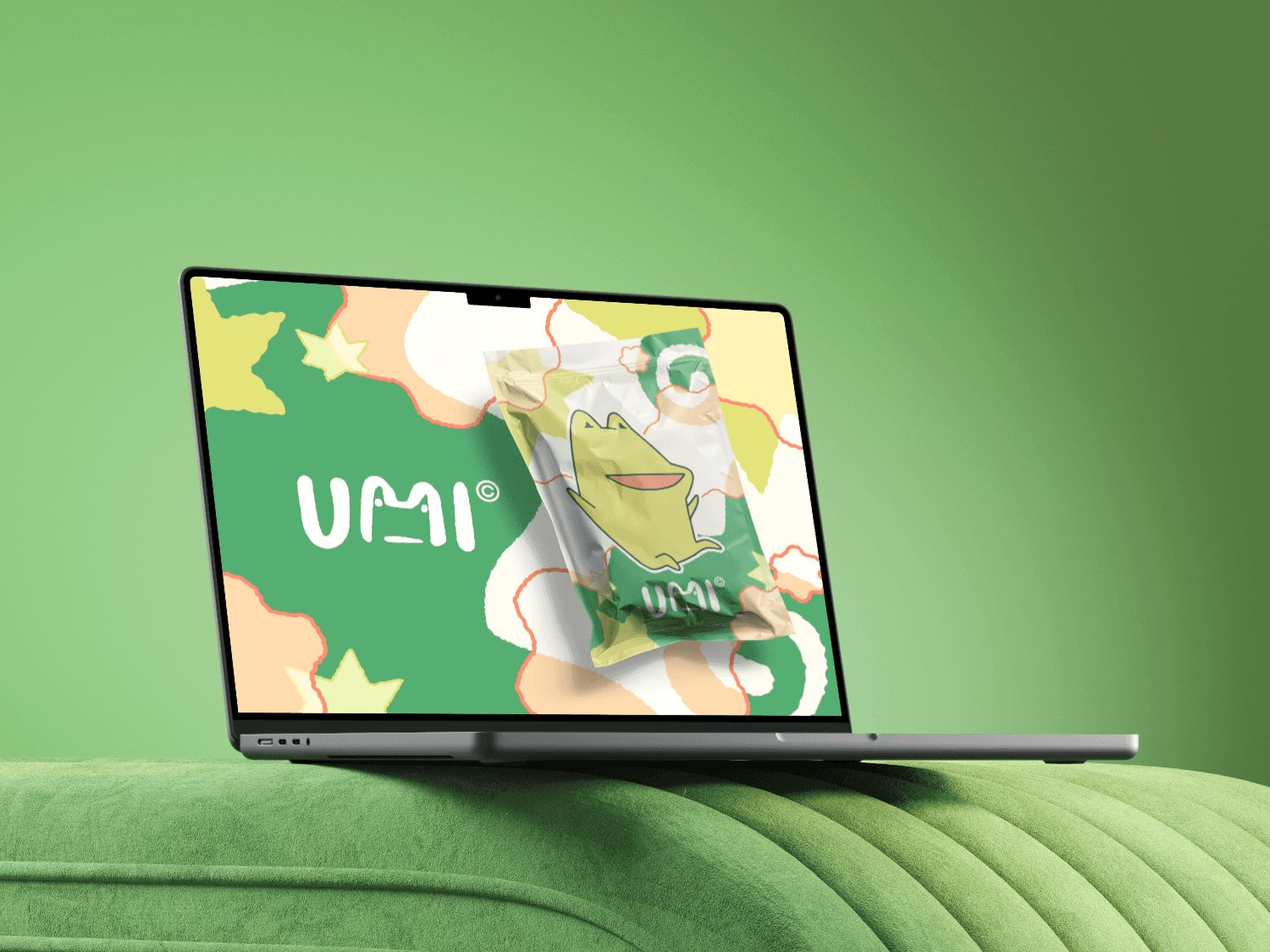
Type
UX Design
Role
Designer
Team
3 Designers
Timeline
1 Month
UMI is an original character-driven product concept that combines a physical collectible with digital interaction via NFC, designed to foster emotional attachment, repeat engagement, and a sense of ownership.
As a co-creator and product designer, I shaped the character backstory of UMI to echo with young-adult audiences that seeks to find their own identity in modern society. I also proposed and spearheaded the involvement of NFC technology and positioned UMI as a consumer tech product, additionally assisting with branding design.
Built with Jean Chen & Yoyo Zhu
Many IP-driven products fail at one thing: making people actually care in the long run. Labubu and Bearbricks are examples of collectible toys that were explosive in popularity, but are now stigmatized as products of consumerism with no practical function. They sit on shelves with no real connection to anything beyond the physical object itself.
UMI was our attempt to bridge that gap; a tangible thing you own paired with a digital experience that reveals itself slowly, over time.
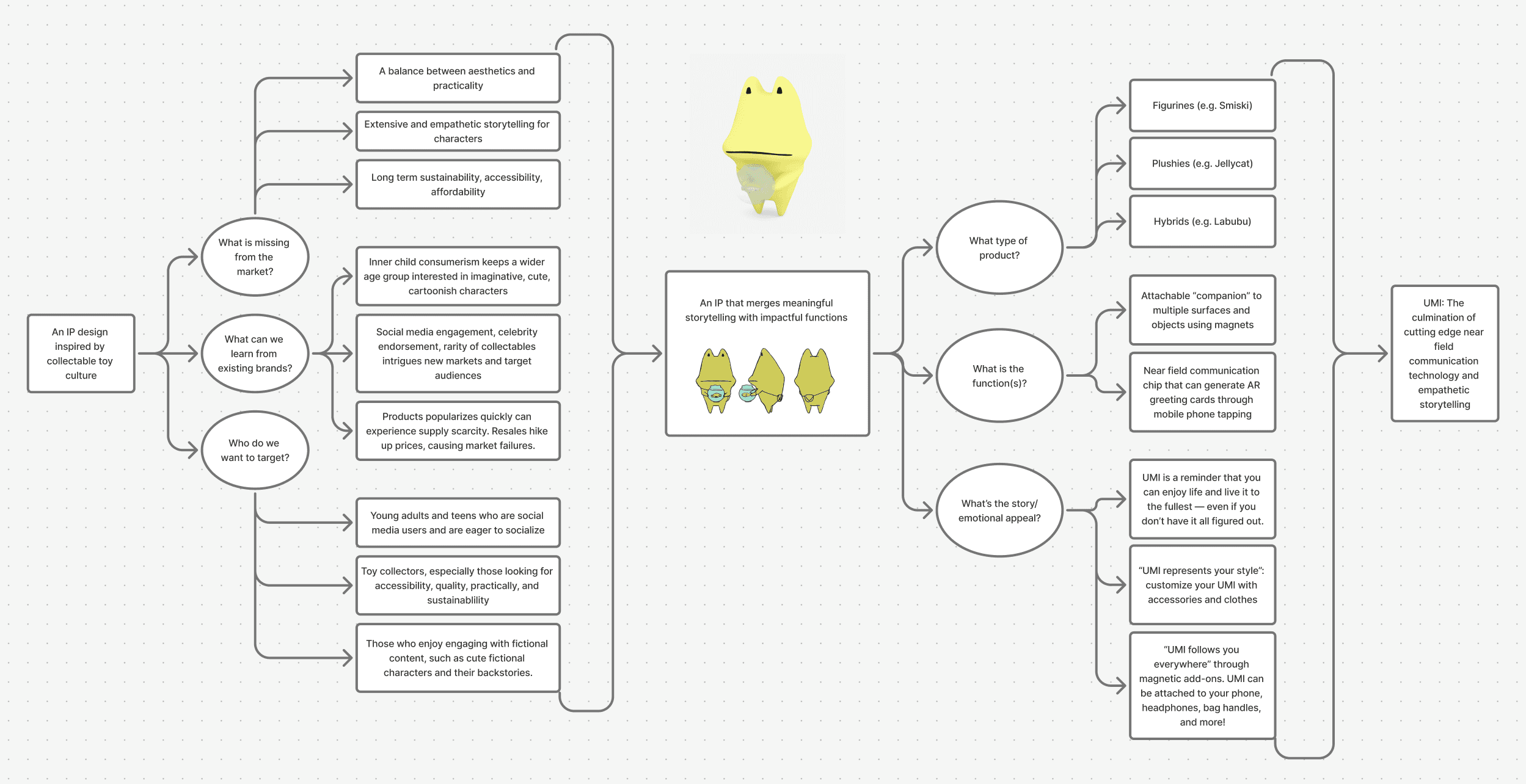
The real design challenge wasn't making an IP that only look good. It was making it feel useful and easy to use. We kept coming back to three questions:
Why would anyone form an attachment to this character?
How do we make the NFC integration something feel meaningful instead of like a cheap trick?
How do we create emotional depth without burying people in features they don't need?
Target User
Young adults and students who enjoy character culture, collectibles, or playful digital experiences
Users who value emotional expression, personalization, and novelty
Core Problem
How might we design an IP-driven physical-digital product that creates emotional attachment and repeat engagement without relying on complex onboarding or constant app usage?
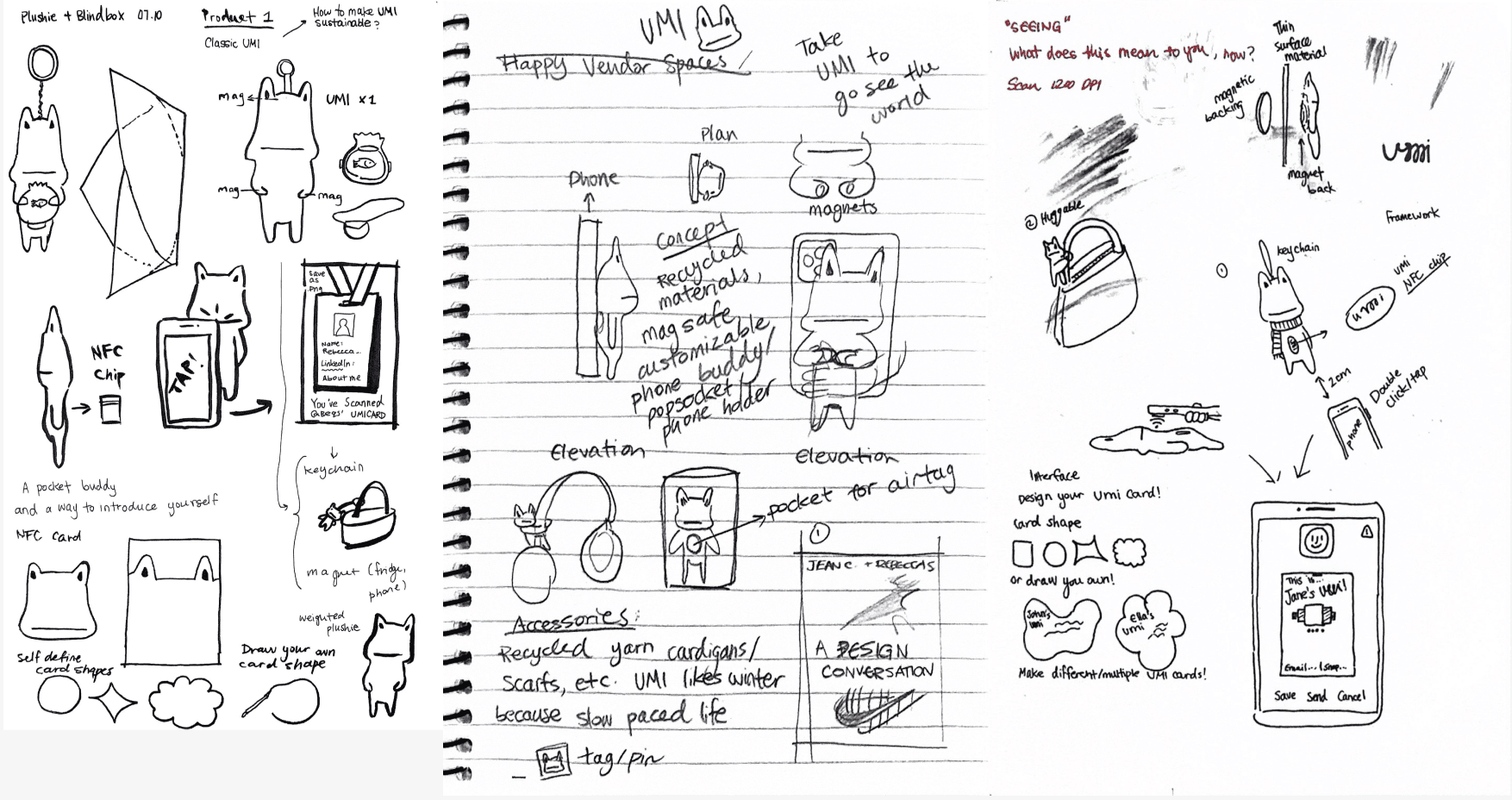
I created interaction flows and interface concepts in Figma to explore:
First-time scan experience
Repeat interactions
Content hierarchy and pacing
I also drafted storyboards about UMI as a character:
UMI (which stands for "ocean" in Japanese") is a frog born in a little pond, but has always dreamed of exploring the vast oceans; this echos the young people who want to explore what the world has to offer.
UMI has tried out many roles, and although UMI has failed many time before, UMI will always stand back up. This translates to, "with UMI by your side, you can be anything you want!"
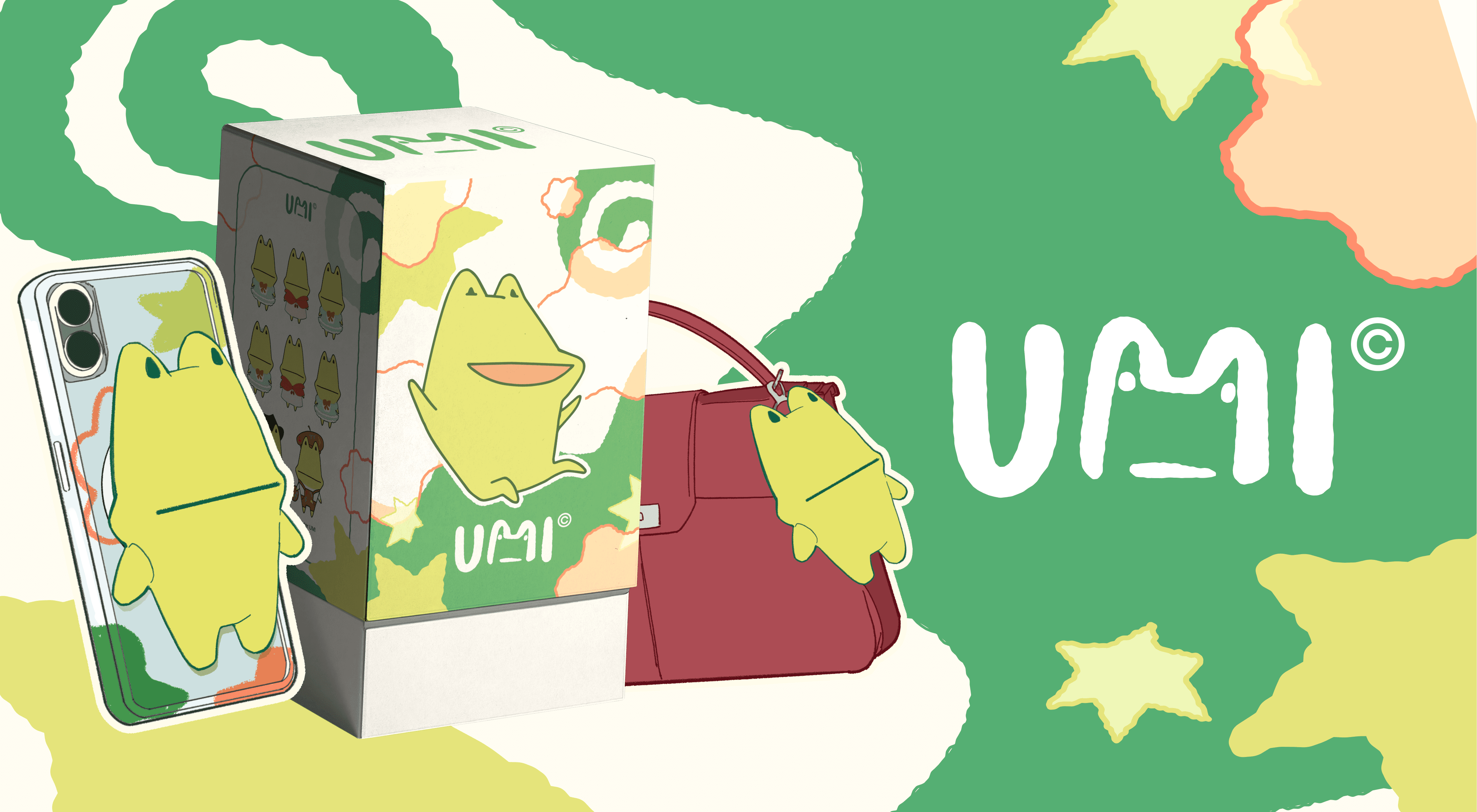
UMI is still under development. Next, we plan to hand-make physical prototypes of UMI, learn to create customized NFC chips, perform usability testing, and create a standalone app coupled with the physical plushie.